Thursday, August 14, 2014

Fantastic Mr. Fox (2009)


Twentieth Century Fox
Directed by Wes Anderson
My rating: 2 stars out of 4
IMDb
(Blu-ray, Criterion Collection)

Quirky story about the life of a fox and his family, inhabiting a world of talking animals, who clashes with local human farmers when he can't resist the urge to raid the chicken coop. The farmers resort to large ammunition to rid themselves of the fox, driving the animals into an underground shelter. The farmers then kidnap his son, leading to a confrontation and rescue. Very modern, very self-conscious and completely disappointing adaptation of the classic children's story by Roald Dahl. This resembles more of an episode of The Simpsons than a movie, a series of vignettes featuring stereotypical characters with mumbled asides and a knowing wink-wink that hey, this is cool and we are funny.

Black Sun (1964)


Nikkatsu
Directed by Koreyoshi Kurahara
My rating: 3 stars out of 4
IMDb
(DVD, Criterion Eclipse)

A jazz-obsessed Tokyo youth living in a bombed out church crosses paths with a black American GI accused of murder. Held at gun point by a machine gun and unable to communicate, the two wrestle for control of the situation. Both the Japanese and American military police make occasional visits in search of the fugitive. His naive image of American black musicians is soon destroyed by the cruel acts of his hostage taker. However, over time he starts feeling empathy for the man and tries to help him. They are chased across crumbling landscapes littered with trash and pollution. Eventually cornered, they improvise a last minute escape attempt which is completely unexpected. Another bizarre, frenetic film from the much-overlooked Kurahara, with a relentless soundtrack by Max Roach.

Sunday, August 10, 2014

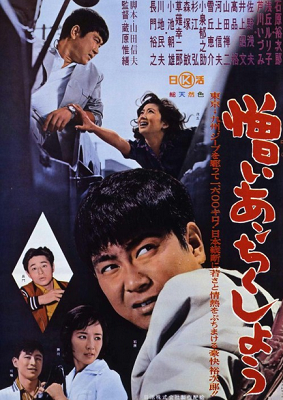
I Hate But Love (1962)


Nikkatsu
Directed by Koreyoshi Kurahara
My rating: 3 stars out of 4
IMDb
(DVD, Criterion Eclipse)

A popular host of a TV show grows bored of his fame, rigid schedule and beautiful manager. Their relationship of two years is strictly Platonic, though they struggle with it and claim to be in love. One day he decides to leave it all behind when he meets a woman who claims to be in "pure love" with a man she has only conversed with for two years through letters. He takes her up on a challenge to drive a jeep across the country to the rural location where her doctor boyfriend lives. His manager/lover follows him, as well as an entourage of cameras filming the whole thing for the TV show. The trip ends with the two couples resolving their differences, but in entirely unanticipated ways. A multi-layered film with interesting symbolism, insightful commentary on fame and the media and the meaning of love in the modern world. Shot mostly on location in the same hand-held style that characterizes Kurahara's other films, a sort of Japanese variation of the Nouvelle Vague.

Thursday, August 7, 2014

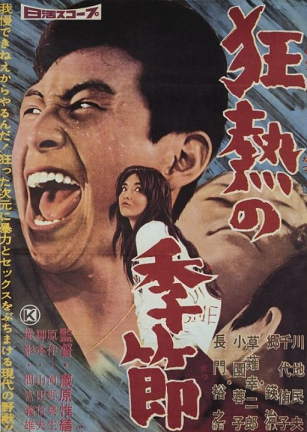
The Warped Ones (1960)


Nikkatsu
Directed by Koreyoshi Kurahara
My rating: 3 stars out of 4
IMDb
(DVD, Criterion Eclipse)

A bored trio of friends, two petty thieves and a prostitute, take out their frustrations on the innocent residents of Tokyo. They hang out at the local bar while listening to jazz. They shoplift and steal cars. One day they run into a reporter who earlier had them arrested, so decide to kidnap and rape his girlfriend. She ends up liking the guy and they can't get rid of her. As might be expected, it doesn't end well for anyone. Despite the lurid subject matter, this is an intense, frenzied look at the post-war frustrations of youth in Japan, taking place during a few days of sweltering heat, set to a red hot jazz soundtrack.

Intimidation (1960)


Nikkatsu
Directed by Koreyoshi Kurahara
My rating: 3 stars out of 4
IMDb
(DVD, Criterion Eclipse)

A bank executive gets a promotion and is given a going away party by his staff. A stranger shows up and blackmails him with incriminating evidence about illegal loans. He demands an exorbitant amount of cash, gives him a gun and tells him to rob his own bank. He does just that, in disguise, but at the last minute backs out when one of the employees recognizes him. However, the tables are turned when the employee uses the situation for his own advantage, and to exact  some personal revenge. Fast paced and tightly edited with a very satisfactory conclusion.

Tuesday, August 5, 2014

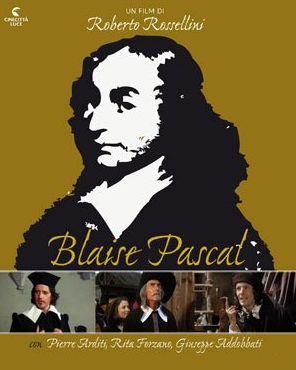
Blaise Pascal (1972)


Directed by Roberto Rossellini
My rating: 2.5 stars out of 4
IMDb
(DVD, Criterion Eclipse)

The life of scientist and philosopher Blaise Pascal in Renaissance France is told mostly through long scenes heavy on dialogue and short on drama. However, this is a slightly better than the other "history" films of Rossellini. A scene in which a woman is tried for witchcraft could have come straight from a Hammer horror film. Later, Pascal gives a brilliant critique of Descartes directly to his face, the subject of the next film in the series. However, there are also long, boring scenes dealing with his experiments in measuring atmospheric pressure and trying to explain a "vacuum" without offending powerful theologians.

Monday, August 4, 2014

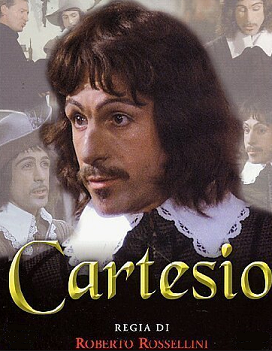
Cartesius (1974)


Directed by Roberto Rossellini
My rating: 2 stars out of 4
IMDb
(DVD, Criterion Eclipse)

Rene Descartes spends much of his time in bed reflecting on mathematics, science and metaphysics, ultimately writing a treatise that combines them all, radically altering the course of philosophy. However, his theories about God attract the attention of theologians in Rome, the same ones that banished Galileo for writing similar "heresy". Descartes lays low in the Netherlands with other scientists who think like him, occasionally venturing out to nearby universities for long discourses on his philosophy. Almost completely devoid of any dramatic thrust, Rossellini relies on dialogue for his structure, which, like his other made-for-TV histories, makes for a rather lackluster viewing experience for all but the most diehard Descartes fans, assuming there are any left.

Sunday, August 3, 2014

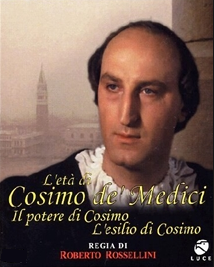
The Age of the Medici (1972)


Directed by Roberto Rossellini
My rating: 2 stars out of 4
(DVD, Criterion Eclipse)

In 15th century Florence, the son of a rich banker clashes with rivals over control of the city's commerce. He is arrested and exiled, but a newly elected council allows him to return a few years later. Loved by the artisans and common people, he allows them to flourish by keeping the city at peace with foreign, and internal, threats. This nearly 4-hour TV mini series lacks any real drama, instead relying on extended conversations about philosophy, architecture, banking, art, etc. for its structure. As a result, it is leadenly paced and can be a real chore to sit through. However, authentic locations, costume design and sets do make for an interesting history lesson.

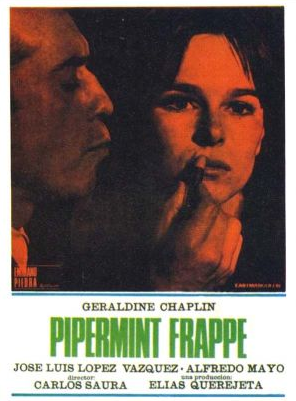
Peppermint Frappe (1967)


Directed by Carlos Saura
My rating: 2.5 stars out of 4
IMDb
(Hulu)

A middle aged doctor lusts after his young nurse assistant. When he goes to meet his brother for a weekend getaway, he introduces his new wife, a dead ringer for his nurse. The three of them explore a dilapidated country house where the two brothers spent their childhood, while the doctor falls madly in love with the girl. Geraldine Chaplin has a dual role as nurse and wife, one brunette and one blonde, one shy and one outgoing. The film, dedicated to Luis Bunuel, sort of comes off as Bunuel-light, lacking the biting satire that makes Bunuel's films so potent.

Friday, August 1, 2014

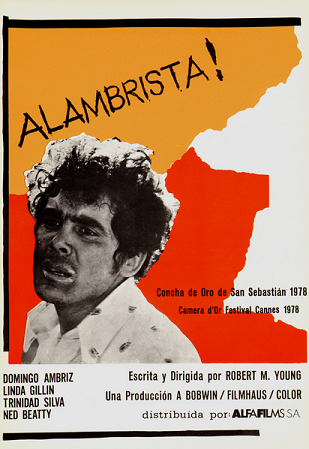
Alambrista! (1977)


Directed by Robert Young
My rating: 3 stars out of 4
IMDb
(Blu-ray, Criterion Collection)

Roberto decides to cross the border from Mexico to find work and pay to support his wife and newborn child. He befriends others who show him the ropes. They travel by hitchhiking or trains across California, working mainly as laborers picking produce in the fields. A friendly waitress takes him into her home and they have a brief relationship, before he is unexpectedly picked up by immigration and sent back to Mexico. He crosses over again, but this time ends up in Colorado where he finds his father and becomes disillusioned. Factual, almost documentary approach is not as emotionally moving as it should be, but it remains highly topical, even more so in the 40 years or so since its release.